

Meta Description: Claude Sonnet 5 is redefining agentic coding in 2026. Here’s what it actually does differently, why developers are switching, and what it means for the future of software work.
Focus Keyword: Claude Sonnet 5
Secondary Keywords: agentic coding, AI coding assistant 2026, Anthropic AI model, AI for developers, autonomous coding agents
Secondary Keywords: agentic coding, AI coding assistant 2026, Anthropic AI model, AI for developers, autonomous coding agents
Claude Sonnet 5 Is Quietly Changing How Developers Code in 2026
If you’ve spent any time in developer forums this month, you’ve probably noticed a pattern. Fewer people are asking “which AI model writes the best single function” and more are asking “which AI model can actually finish the whole task without me babysitting it.” That shift in the question is exactly why Claude Sonnet 5 has become the model everyone in the coding world is talking about right now.
Anthropic released Claude Sonnet 5 at the end of June 2026, and within weeks it had become the default recommendation in a lot of engineering Slack channels. Not because it’s flashy. Not because of a viral demo video. Because it’s dependable in a way that earlier models simply weren’t, and dependability is the one quality that turns a novelty tool into something teams actually build workflows around.
This article breaks down what actually changed, why the timing matters, how it compares to what else shipped this year, and what the honest limitations still are — because no model, however good, deserves an uncritical writeup.
The State of AI Coding Assistants Before Sonnet 5
To understand why Sonnet 5 landed the way it did, it helps to remember where things stood just a year or two earlier. Early AI coding tools were genuinely impressive at short, self-contained tasks: write a function, explain this error, generate a regex. But the moment a task required holding context across multiple files, multiple steps, and multiple decisions, quality dropped off fast. Models would forget earlier constraints, contradict their own previous choices, or quietly “fix” something that wasn’t broken while missing the actual bug.
That gap is why the phrase “agentic coding” became such a loaded term. Every lab claimed some version of it. Very few delivered something developers trusted enough to let run unsupervised for more than a few minutes at a time. The pattern was familiar: impressive first fifteen minutes, followed by a slow unraveling that meant someone still had to review every line anyway — which defeated a lot of the promised time savings.
What Actually Changed With Claude Sonnet 5
The headline feature isn’t a bigger context window or a higher benchmark score, even though those numbers are strong. The real story is stamina. Claude Sonnet 5 can hold onto a multi-step coding task — debugging a broken pipeline, refactoring a legacy module, wiring up a new API integration — for far longer without losing track of what it’s doing or quietly introducing a bug three steps back.
That matters because agentic coding only works if the agent can be trusted to run for a while unsupervised. A model that’s brilliant for ten minutes and then drifts isn’t actually saving anyone time; it’s just moving the review burden somewhere else, and arguably making it harder, because now a human has to untangle AI-generated changes instead of writing the fix themselves from scratch. Developers testing Sonnet 5 have reported it staying coherent across much longer sessions, which is the practical difference between “assistant” and “agent” in day-to-day use.
There’s also a noticeable improvement in how the model handles ambiguity. Instead of guessing at intent and running with the first plausible interpretation, Sonnet 5 tends to surface assumptions explicitly, or ask a clarifying question when a decision genuinely could go two different ways. That sounds like a small thing until you’ve watched an earlier-generation model confidently rewrite half a codebase based on a misunderstanding that a single clarifying question would have avoided.
Pricing Is Part of the Story Too
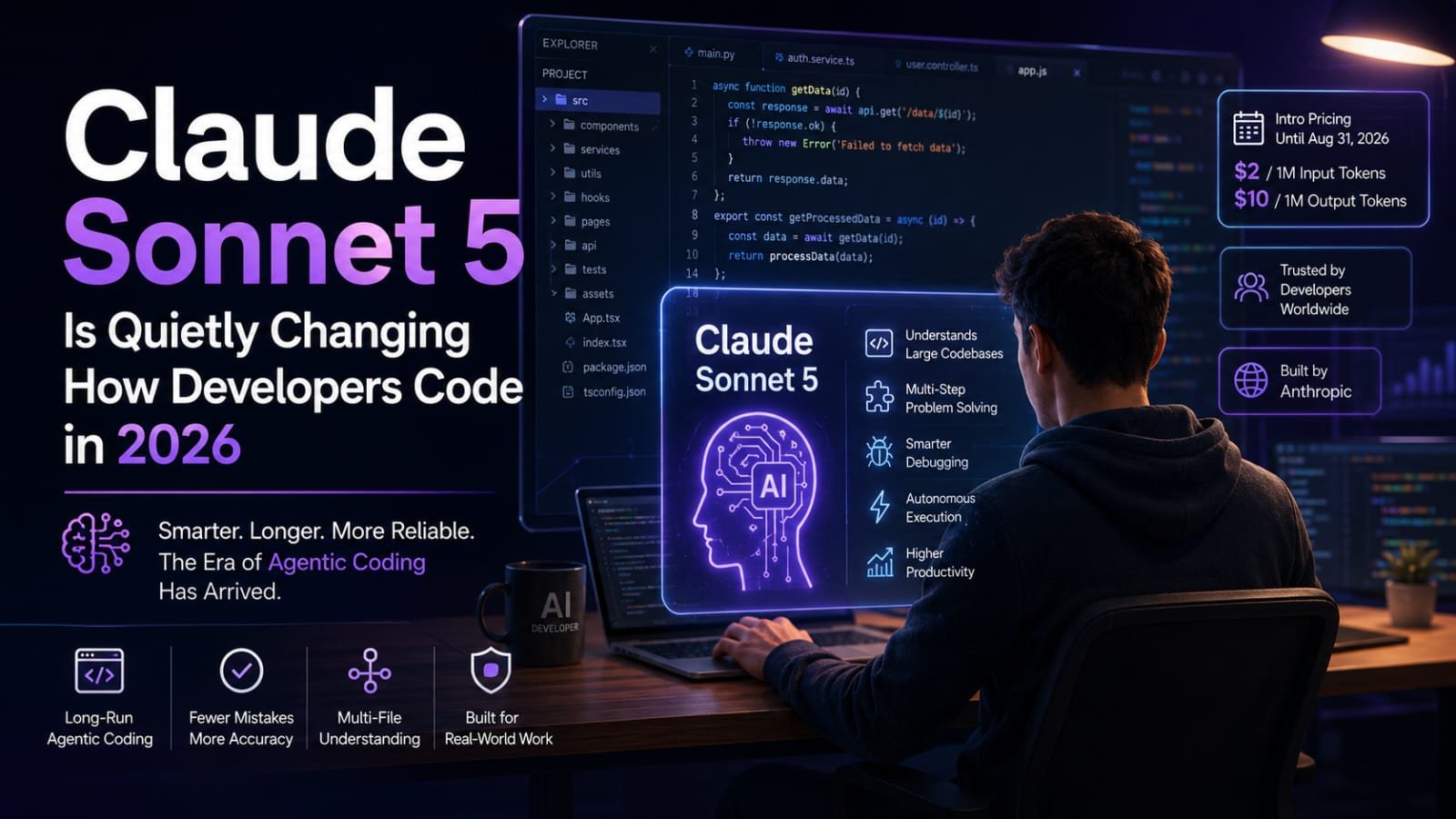
Anthropic priced Claude Sonnet 5 aggressively for a frontier model: introductory rates of $2 per million input tokens and $10 per million output tokens, holding until the end of August 2026 before moving to $3 and $15. For teams running agentic workflows that chew through tokens fast — remember, longer autonomous sessions mean more tokens consumed per task — that pricing window matters almost as much as the raw capability.
It’s a big part of why adoption moved quickly instead of staying stuck in “interesting demo” territory. A model can be technically superior, but if the cost of letting it run long agentic sessions is prohibitive, teams will keep it on a short leash and never really discover what it can do. Anthropic’s pricing decision effectively invited teams to stress-test the model at scale during a limited window, which is a smart way to build real-world trust fast.
Why This Is Bigger Than One Model Release
Step back from Sonnet 5 specifically and you can see a broader trend across the AI industry in 2026. The conversation has shifted from “how big is the model” to “how well does it complete a real task without supervision.” Competing labs are chasing the same thing, but the fact that Anthropic shipped a model that developers are voluntarily switching to — not because a company mandated it, but because it saved them a Tuesday afternoon — says something about where the technology actually stands right now.
This also lines up with how the wider agent ecosystem is maturing across the industry, not just at Anthropic. Coding was always going to be the first place agentic AI proved itself, because the feedback loop is so tight: code either compiles and passes tests, or it doesn’t. That built-in verification is what let models like Sonnet 5 get trusted with longer leashes faster than agents operating in messier, harder-to-verify domains like customer support, research synthesis, or open-ended writing.
It’s worth noting this didn’t happen in isolation either. The same weeks that brought Sonnet 5 also saw Claude Fable 5 restored to global access after a brief suspension tied to export control rules, and competitors like GPT-5.6 moving into government-vetted previews. The frontier is genuinely crowded right now, which raises the bar for what counts as a meaningful release instead of just another incremental update.
How Sonnet 5 Compares to What Else Shipped This Year
It’s tempting to declare a single winner in the AI model race, but the honest picture is more nuanced. Different models are pulling ahead in different lanes:
- Claude Sonnet 5 has built its reputation specifically around long-run coding, debugging, and multi-step tool use, with a price point that makes heavy agentic usage financially realistic for smaller teams.
- GPT-5.6 is still in a more restricted preview phase, available to government-vetted partners rather than the general public, which makes direct comparison difficult until wider access opens up.
- Open-weight models like Kimi K3 and DeepSeek V4 are closing the capability gap fast, and they offer something closed models can’t: full control over deployment, which matters enormously for regulated industries or companies wary of sending proprietary code to a third-party API.
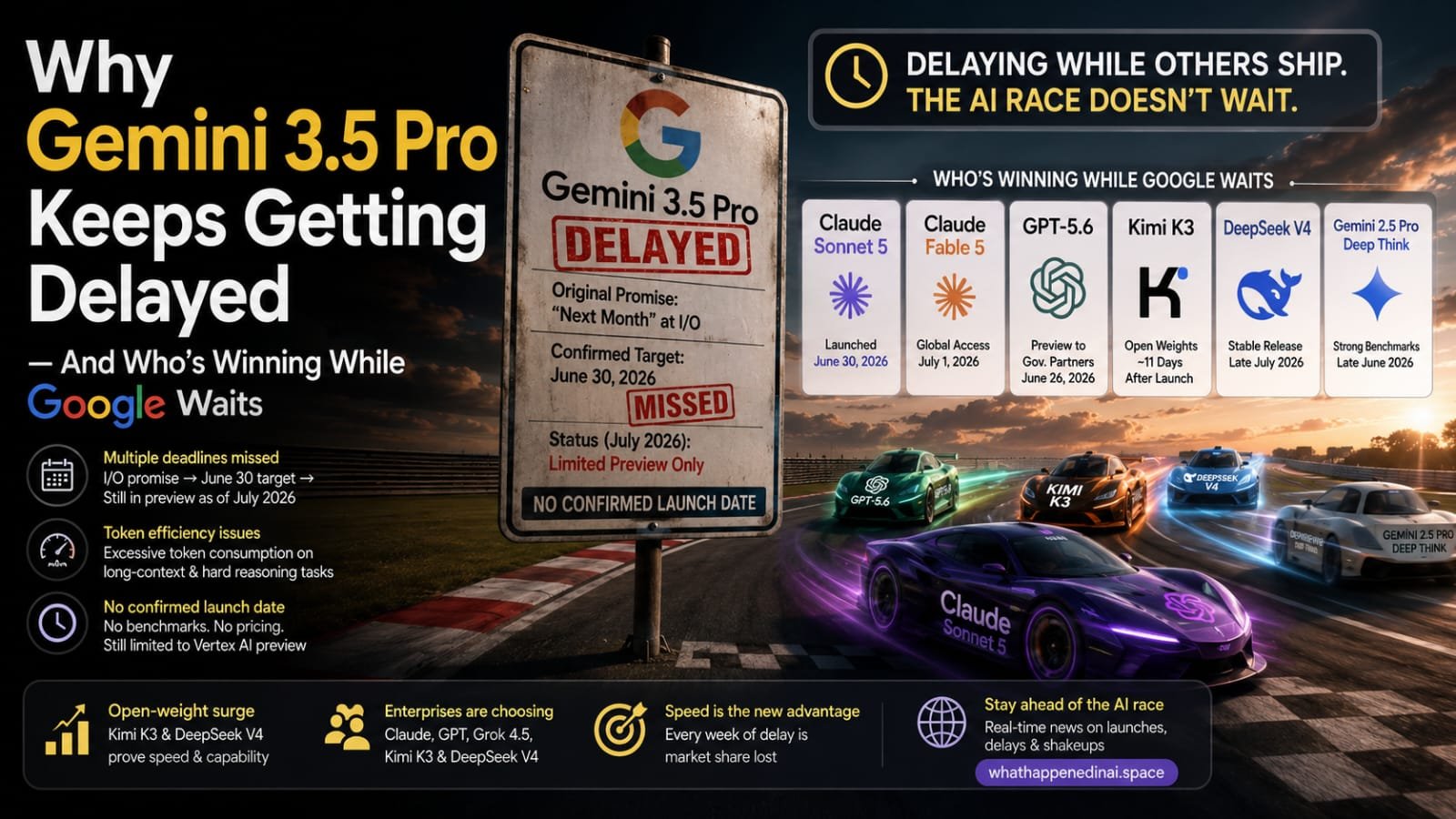
- Gemini’s frontier coding model has faced its own delays this year, which has arguably created breathing room for Sonnet 5 to establish itself as the default choice before Google’s next major release lands.
None of this means Sonnet 5 is objectively “the best” model in every dimension — capability leaderboards shift monthly, and today’s leader is rarely next quarter’s leader too. What it does mean is that Anthropic found a genuine gap in the market — reliable, affordable, long-running agentic coding — and filled it convincingly enough that switching costs for teams already felt worth it.
What Developers Are Actually Using It For
Based on how the rollout has played out across engineering teams, the common use cases fall into a few clear buckets:
- Refactoring large, unfamiliar codebases without a human reading every diff line by line, which used to be one of the most tedious and error-prone parts of taking over legacy software.
- Multi-file debugging, especially in cases where the root cause isn’t anywhere near the file that’s actually throwing the error — a scenario that used to require an experienced engineer’s intuition more than raw pattern matching.
- Writing and maintaining test suites alongside feature code, rather than as an afterthought bolted on right before a release deadline.
- Acting as a first-pass reviewer before a human engineer looks at a pull request, catching obvious issues so the human reviewer can focus attention on architecture and judgment calls instead of typos and missing edge cases.
- Migrating between frameworks or language versions, a category of work that’s necessary but rarely exciting, and therefore exactly the kind of task teams are happy to hand off.
None of this is science fiction. It’s the unglamorous, repetitive part of software engineering — which is exactly the kind of work that benefits most from a model that doesn’t get bored, doesn’t get careless near the end of a long task, and doesn’t need a coffee break.
The Honest Caveats
It’s worth being clear-eyed here too, because a lot of AI coverage skips straight past the limitations. Longer autonomous runs mean mistakes can also compound further before anyone notices, which is why most teams adopting Sonnet 5 are still keeping a human in the loop for anything touching production systems, customer data, or financial logic. Agentic doesn’t mean unsupervised, at least not yet, and treating it that way is how small bugs quietly become expensive incidents.
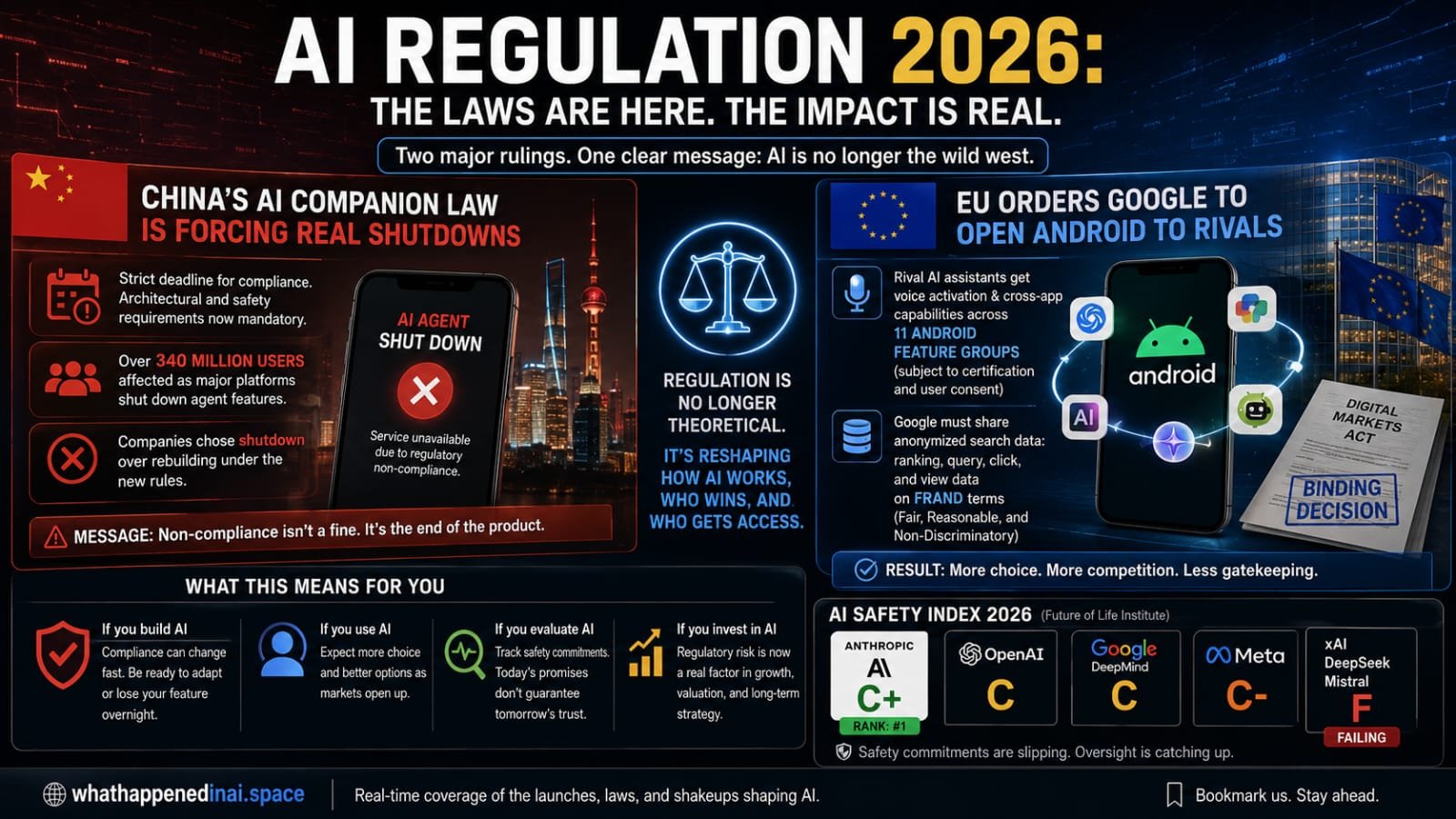
There’s also the broader industry backdrop worth keeping in mind. Independent safety researchers have flagged that several major AI labs have loosened voluntary safety commitments this year, including pledges to pause development as systems approach specific risk thresholds. Anthropic scored highest among major labs in the latest independent safety review, but even that was graded a C+, which is a reminder that “best in class” in this industry still leaves plenty of room for improvement. Any team adopting agentic coding tools at scale should be pairing that adoption with real internal review processes, not just trusting the model because it’s had a good few weeks of positive press.
Cost is another factor worth watching closely. The current pricing window is introductory, and it’s already scheduled to rise after August 2026. Teams that build workflows assuming today’s pricing holds indefinitely may find their budgets need adjusting later in the year.
How to Evaluate Sonnet 5 for Your Own Team
If you’re considering a trial, a few practical suggestions based on how early adopters have approached it:
- Start with a task category that has strong built-in verification, like code with an existing test suite, rather than greenfield work with no safety net.
- Set clear boundaries on what the model can touch autonomously versus what still requires sign-off before merging.
- Track token usage closely during the introductory pricing window so you have real numbers before the price increase in September.
- Compare output not just against your previous AI tool, but against your team’s own historical velocity, since that’s the number that actually matters for planning.
What This Means for Junior Developers and Career Growth
One question that keeps coming up whenever a model like Sonnet 5 makes headlines is what it means for people early in their coding careers. If an AI can refactor a codebase and write test suites, does that shrink the entry-level job market?
The more grounded answer, based on how teams are actually deploying these tools so far, is that the nature of junior work is shifting rather than disappearing outright. Reviewing AI-generated changes, understanding why a particular refactor was chosen, and catching the subtle cases where an agent’s confident output is subtly wrong all still require a human who understands the codebase deeply. If anything, teams report that junior engineers who learn to work alongside agentic tools effectively — treating them like a very fast, occasionally overconfident collaborator rather than an oracle — end up building judgment faster than those who either avoid the tools entirely or trust them blindly. The skill being tested is shifting from “can you write this function” toward “can you tell when the generated function is wrong,” which is arguably a harder and more valuable skill in the long run.
The Bottom Line
Claude Sonnet 5 isn’t a revolution in the sense of doing something no model has ever attempted before. It’s a maturation — a model that finally does the boring, reliable version of agentic coding well enough that developers trust it with real work instead of just toy demos. In an industry that’s been promising “AI that codes for you” for years, that’s a bigger deal than another benchmark chart would suggest.
If you’re evaluating AI coding tools for your team this quarter, Sonnet 5 is worth a real trial run — not because it’s perfect, but because it’s one of the first models where “let it run and check back later” is starting to feel like a genuinely reasonable way to work, rather than wishful thinking dressed up in a product launch.
Frequently Asked Questions
Is Claude Sonnet 5 better than GPT-5.6 for coding?
It’s hard to say definitively, since GPT-5.6 is still limited to a government-vetted preview rather than general availability. Once wider access opens up, a fair side-by-side comparison will be possible.
How much does Claude Sonnet 5 cost?
Introductory pricing is $2 per million input tokens and $10 per million output tokens, in effect until August 31, 2026, after which it rises to $3 and $15 respectively.
Can Claude Sonnet 5 be trusted to work unsupervised?
It can hold longer autonomous sessions than earlier models, but most teams still keep a human reviewer in the loop for anything touching production, customer data, or sensitive systems.
Is Claude Sonnet 5 open weight?
No. It’s a closed, API-accessed model, unlike open-weight competitors such as Kimi K3 or DeepSeek V4.


Leave a Reply